Sanctions on Google for Failing to Comply with PP Tunas: What It Means for Platform Compliance in Indonesia
 Apr 13, 2026
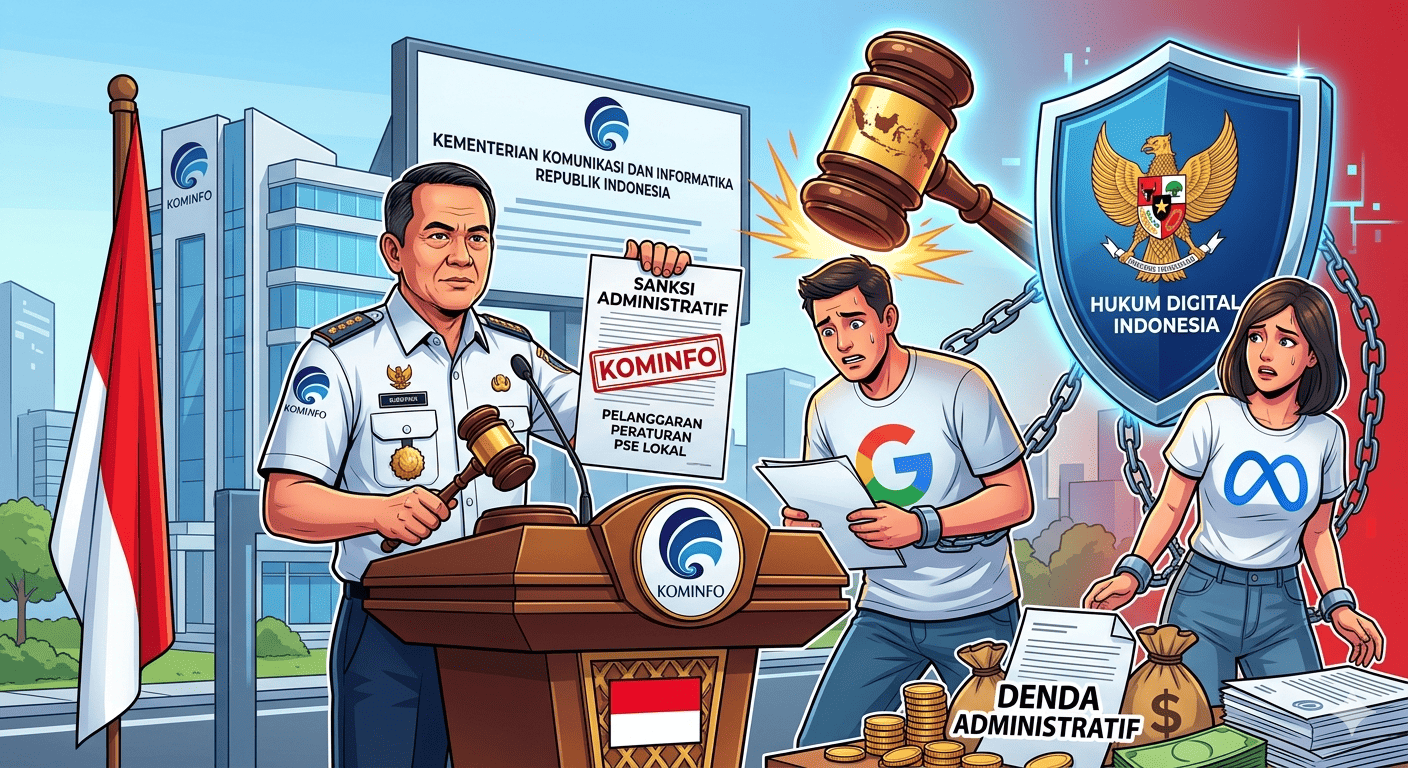
Table of Contents
Executive Summary
The Indonesian government has imposed staged sanctions on Google, in its capacity as the owner of YouTube, after concluding that the company had not yet demonstrated compliance with PP Tunas. The move signals a firmer enforcement posture around child protection and digital-platform governance in Indonesia.
For technology companies, digital platforms, and online intermediaries, this development matters because it shows that platform-safety obligations are no longer being treated as soft expectations. They are increasingly being framed as compliance obligations with regulatory consequences.
What Happened
According to the underlying reporting, the government determined that Google had not yet complied with PP Tunas and therefore became subject to staged sanctions. The enforcement step is notable because Google, through YouTube, is one of the most significant digital-platform operators in Indonesia.
The case also shows that regulators are willing to apply progressive enforcement tools when a platform is perceived as falling short of compliance expectations under the child-protection framework.
Why This Matters
This is not only about one company. It marks a broader shift in Indonesia’s regulatory approach to platform accountability. Child-safety obligations are being operationalized, and large technology companies may increasingly be judged on whether their governance, controls, and response mechanisms are adequate in practice.
- First, enforcement is becoming real. Regulators are showing that non-compliance with PP Tunas can lead to staged sanctions, not just warnings or policy dialogue.
- Second, large platforms are not immune. The fact that Google was targeted shows that scale and market relevance do not shield a platform from regulatory action.
- Third, compliance now requires implementation evidence. Companies may need to demonstrate not only policy alignment, but also the actual operation of safety controls, escalation channels, and governance mechanisms.
Bitlion View
From Bitlion’s perspective, this development is a strong indication that Indonesia is moving toward a more enforceable model of digital-platform regulation. Companies that previously treated child-safety obligations as policy or trust-and-safety issues alone may now need to reframe them as formal compliance matters.
That means leadership teams should assess whether their regulatory posture is defensible not just in theory, but in actual documented operations, internal accountability, and response readiness.
What Companies Should Do Next
- Review PP Tunas obligations against existing product, moderation, reporting, and escalation workflows.
- Identify compliance gaps between written policy commitments and implemented operational controls.
- Strengthen documentation so the company can evidence safety governance and remediation efforts if challenged by regulators.
- Align legal, policy, compliance, and engineering teams around a unified child-safety compliance program.
- Prepare for staged enforcement risk, especially where the platform has a large user base or material exposure involving children.
Closing Note
The sanctions imposed on Google over PP Tunas compliance are an important marker in Indonesia’s regulatory trajectory. For platform companies, the lesson is straightforward: regulators are increasingly prepared to move from expectation-setting to enforcement, and child protection is becoming a core part of platform compliance in practice.
Primary source: Bloomberg Technoz / underlying reporting context.